
Designing a Weatherproof Outdoor Kitchen and Bar
An outdoor kitchen should make entertaining easier—not leave you worrying about rain, frozen pipes, stained counters, or a grill exposed to snow. That is especially important across the western suburbs, where summer heat, fall leaves, freeze-thaw cycles, and winter storms can all affect an outdoor living space.
A weatherproof design begins long before appliances are selected. Thoughtful placement, durable materials, drainage, protected utilities, and overhead shelter work together to create a space that performs throughout the year. Here is what homeowners should consider when planning an outdoor kitchen, bar, or covered entertaining area.
Begin With Placement, Drainage, and an Efficient Layout
The kitchen should be convenient to the house without directing grill smoke toward doors, windows, or gathering areas. It also needs enough room for guests to move without crossing the cook’s work zone. A practical plan usually includes separate areas for preparation, cooking, serving, and seating.
Popular configurations include:
- Straight runs: Efficient for smaller patios and secondary cooking stations.
- L-shaped kitchens: Provide more counter space while defining the cooking area.
- U-shaped kitchens: Create a complete workspace for homeowners who entertain frequently.
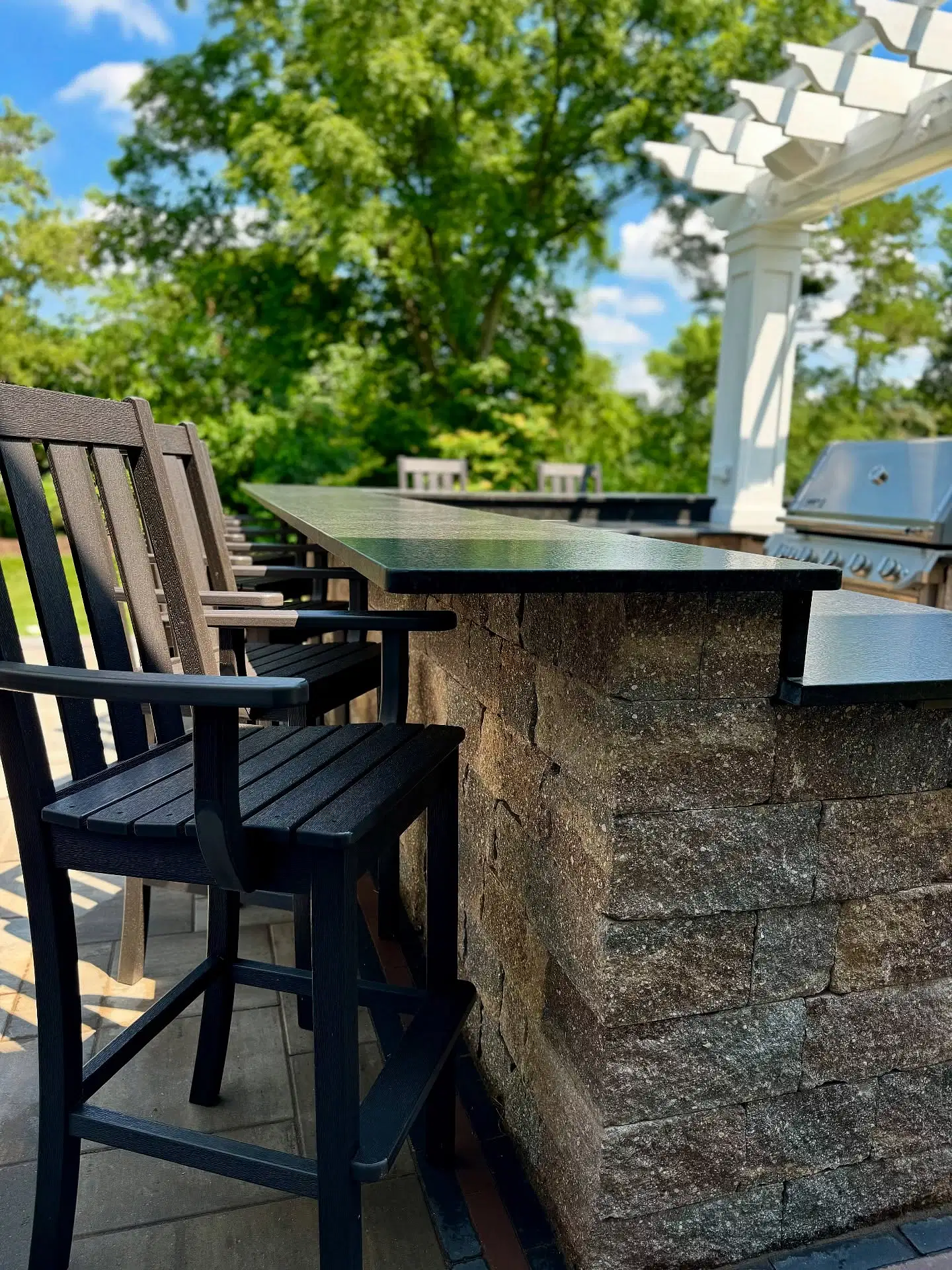
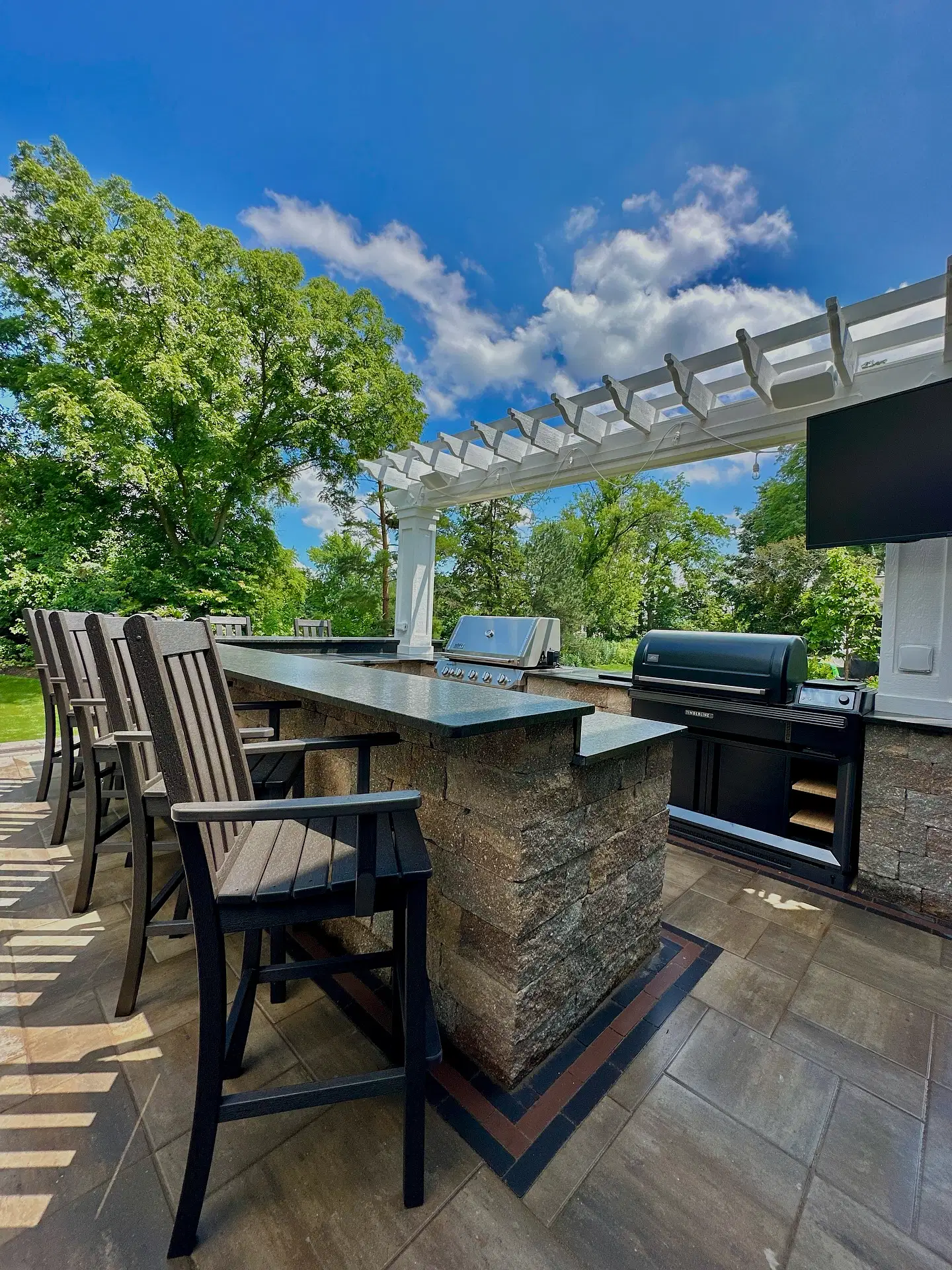
- Kitchen-and-bar islands: Let the cook interact with guests while keeping hot appliances safely separated from seating.
Fall outdoor kitchen and bar layout ideas should account for more than extra seating. Consider where leaves will collect, how low-angle sunlight affects guests, and whether heaters or a fire feature can be used with proper clearances.
Drainage is equally important. The patio surface should direct water away from the house, cabinets, and appliance openings. Standing water can stain paving, create slippery surfaces, and worsen freeze-thaw damage. If the yard already holds water, drainage should be evaluated before construction rather than hidden beneath a new patio. Outdoor Masters can coordinate the kitchen with a properly prepared patio foundation and the surrounding landscape.
Select Materials That Can Handle Moisture and Freeze-Thaw Cycles
Weather resistance depends on the entire assembly, not just the countertop. Cabinet framing, finishes, fasteners, adhesives, and appliance enclosures must be suitable for outdoor exposure.
Reliable material choices often include:
- Masonry or properly engineered exterior-rated cabinet systems
- Stainless steel hardware and outdoor-rated appliances
- Dense natural stone, porcelain, or other exterior-rated countertop surfaces
- Pavers and wall materials designed for freeze-thaw conditions
- Sealants, mortars, and adhesives specified for outdoor use
Some countertop materials require periodic sealing, while others need less maintenance. Porous finishes can absorb grease and moisture if neglected. Dark surfaces may become uncomfortably hot in direct summer sun, and polished finishes can show fingerprints or water spots more readily. Material selection should reflect how the space will actually be used—not just how a sample looks indoors.
Utilities deserve the same attention. Gas, electric, water, and drainage lines should be installed by qualified professionals and protected according to applicable codes. Ground-fault protection, exterior-rated outlets, accessible shutoffs, appliance ventilation, and service access all belong in the original plan.
Homeowners should also ask whether permits are required. Requirements vary by municipality and project scope, but gas, electrical, plumbing, structural work, retaining walls, and roofed structures may require permits or inspections. DuPage County stormwater rules or local setback requirements can also affect some properties. A detailed estimate should identify allowances, utilities, materials, and permitting responsibilities so unexpected costs do not appear halfway through construction.
Add Adjustable Shelter Without Trapping Heat or Smoke
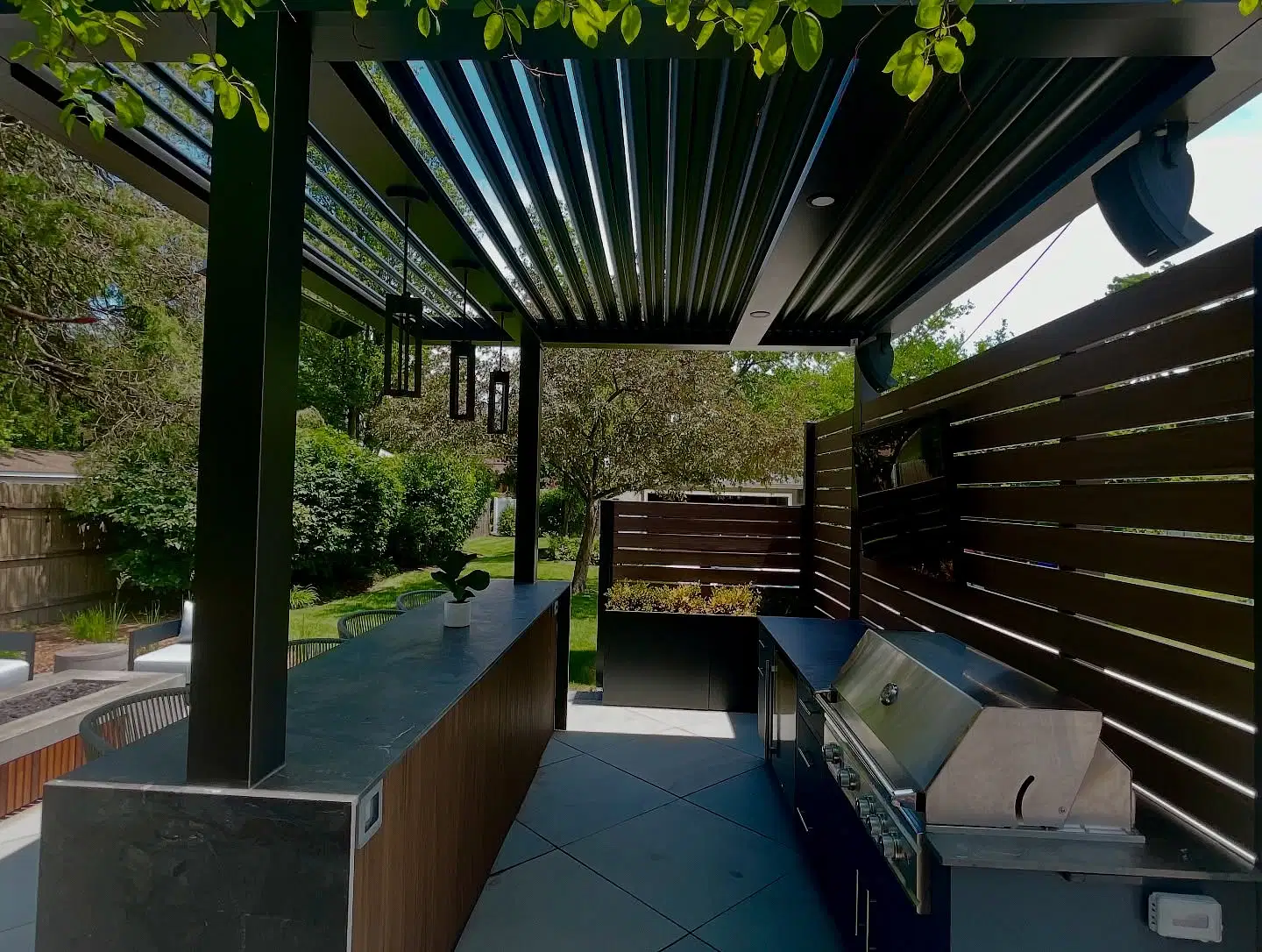
A permanent pavilion offers substantial coverage, but homeowners who want flexible sunlight and ventilation may prefer a louvered pergola. Its adjustable roof can open on clear days and close when rain arrives, making it particularly useful over a dining area or outdoor bar.
A louvered roof pergola over an outdoor bar should be designed as a coordinated system. Roof drainage must discharge away from seating and food-preparation areas. Posts should not interrupt walkways, appliance doors, or sightlines. Integrated lighting can improve visibility after sunset, while fans may make humid evenings more comfortable.
Grills and other heat-producing appliances require manufacturer-specified overhead and side clearances. Ventilation remains essential even when the louvers are open. The safest arrangement may place the grill at the outer edge of the covered area while keeping preparation, dining, and outdoor bar seating beneath the roof.
Current outdoor living designs increasingly combine adjustable shade, dimmable LED lighting, weather sensors, and low-voltage controls. These features are useful, but they should remain easy to operate and service. A dependable manual override and accessible components can matter more over time than an overly complicated control system.
Plan for Winter Before the First Freeze
Weatherproof does not mean maintenance-free. A well-designed kitchen should make seasonal care simple and provide access to shutoffs, drains, appliance connections, and cabinet interiors.
Before freezing weather arrives:
- Shut off and drain seasonal water lines according to the plumbing design.
- Clean the grill, grease tray, refrigerator, sink, and storage areas.
- Remove food, liquids, and items that could freeze or attract pests.
- Inspect countertop joints, sealant, masonry, and patio drainage.
- Secure manufacturer-approved appliance covers without blocking necessary ventilation.
- Store loose cushions and accessories in a dry location.
Outdoor refrigerators, ice makers, and sinks have different winterization requirements, so follow each manufacturer’s instructions. Avoid assuming that a cover alone will protect water-bearing equipment from a deep freeze. For more seasonal guidance, review these winter patio care recommendations.
Build a Space That Is Ready for Real Life
A successful outdoor kitchen and bar balances appearance with drainage, safe utilities, durable materials, comfortable circulation, and year-round protection. Clear plans and itemized estimates also make it easier to compare scope and workmanship rather than choosing solely on the lowest price.
Outdoor Masters designs and builds outdoor kitchens, outdoor bars, louvered pergolas, patios, lighting, fireplaces, firepits, and complete outdoor living areas. To discuss a weather-ready entertaining space for your Aurora-area home, contact Outdoor Masters for a project consultation.